


127
Walking into the gym day after day to perform the same sequence of exercises can quickly turn an inspiring fitness journey into a dull chore. Many dedicated gym-goers eventually hit a motivational plateau, find their progress stalling, or experience physical burnout from repetitive movement patterns. When a workout routine begins to feel like an obligation rather than an energizing part of the day, introducing fresh stimuli is critical.
Group fitness classes offer an effective, structured way to break through training plateaus and inject dynamic variety into a standard gym schedule. By blending expert instruction, varied movement modalities, diverse energy systems, and high-energy social environments, group classes bridge the gap between solo strength training and multifaceted functional athleticism.
Overcoming Workout Monotony and Training Plateaus
The human body and mind thrive on challenge, but they also adapt rapidly to predictability. Following the exact same workout split month after month introduces specific drawbacks:
-
Neural and muscular stagnation: When the neuromuscular system encounters identical loads, vectors, and cadences indefinitely, the rate of physiological adaptation drops significantly.
-
Repetitive strain vulnerabilities: Constantly loading the body along the same planes of motion can lead to overuse irritation in isolated joints and tendons.
-
Cognitive disengagement: Lifting or running on autopilot reduces mental focus, which can diminish exercise intensity and compromise technical form.
Group classes disrupt this monotony by outsourcing the programming to experienced instructors. Stepping into a group studio takes the mental burden of workout design off your shoulders, exposing your nervous system and muscle groups to unexpected intervals, unfamiliar tempos, and novel equipment combinations.
Expanding Functional Movement Patterns
Solo gym workouts often become confined to the sagittal plane, which involves forward and backward motions like bench presses, bicep curls, squats, and straight-line treadmill running. However, authentic functional fitness demands multi-planar capability.
Group classes frequently incorporate diverse movement styles that challenge the body through three-dimensional space:
-
Frontal and transverse plane mechanics: Formats such as dance cardio, step training, and functional bootcamps utilize lateral shuffles, curtsy lunges, and rotational chops that activate underused stabilizing muscles like the gluteus medius and obliques.
-
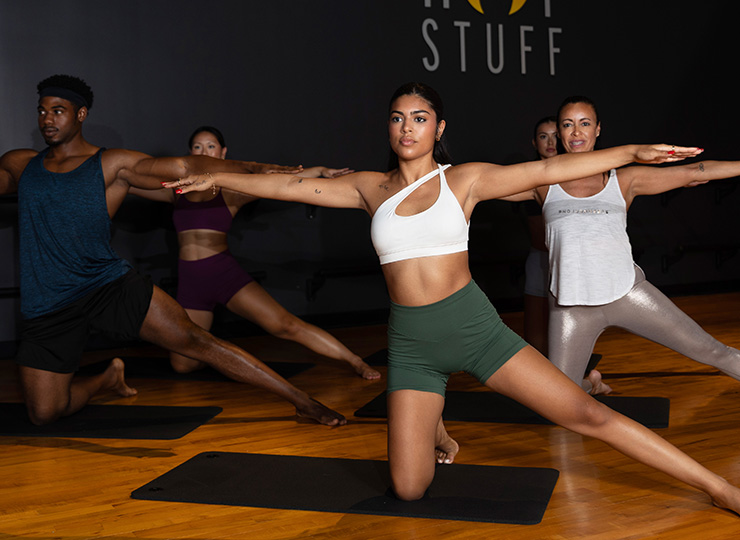
Loaded mobility and isometric holds: Classes like yoga, barre, and mat Pilates focus on sustained muscular contractions at challenging joint angles, enhancing end-range joint control, hip mobility, and spinal health.
-
Agility and reaction drills: Functional group circuits often integrate ladder drills, cone touches, and partner passes that train balance, coordination, and rapid deceleration.
Diversifying movement trajectories builds a resilient physical framework, filling the functional gaps left by traditional, linear machine and barbell training.
Accessing Different Energy Systems and Formats
A well-rounded physical conditioning routine should target the phosphagen system, the glycolytic pathway, and the aerobic energy system. Solo gym sessions frequently bias one system over the others, but the wide variety of class formats allows you to target specific metabolic adaptations with precision.
Indoor Cycling and Rhythm Riding
Indoor cycling delivers high-volume aerobic and anaerobic conditioning with zero joint impact. Instructors manipulate pedal cadence, magnetic resistance, and seated-to-standing transitions to build cardiovascular endurance, enhance lactate threshold tolerance, and strengthen the quadriceps, hamstrings, and calves without pounding the knees or ankles.
High-Intensity Interval Training and Bootcamps
Bootcamp-style workouts alternate between explosive anaerobic bursts and short recovery intervals. By utilizing tools like kettlebells, medicine balls, battle ropes, and plyometric boxes, these classes elevate post-exercise oxygen consumption, improve power output, and torch calories in a fast-paced environment.
Barre and Low-Impact Conditioning
Barre classes draw inspiration from ballet, Pilates, and isometric strength principles. Utilizing small, high-repetition micro-movements, light hand weights, and resistance loops, barre targets slow-twitch muscle fibers that are rarely stimulated during heavy, low-repetition compound lifting. This develops muscular endurance, improves pelvic alignment, and strengthens deep core stabilizers.
Mat and Reformer Pilates
Pilates emphasizes core control, breath integration, and segmental spinal articulation. Integrating a weekly Pilates class into a heavy lifting regimen strengthens the transverse abdominis, improves diaphragmatic breathing mechanics, and corrects the muscular asymmetries that develop from dominant-side lifting habits.
Yoga and Mobility Flows
Ranging from dynamic Vinyasa flows to passive Yin yoga, these sessions enhance fascial elasticity, downregulate the central nervous system, and improve tissue perfusion. Adding a dedicated flow class balances intense lifting days by shifting the body into a parasympathetic recovery state.
The Psychological and Social Advantage of the Pack Effect
Exercise psychology has long recognized the Kohler effect, a phenomenon where individuals perform better when working out alongside others compared to exercising alone. Group fitness leverages this psychological dynamic naturally.
Training in a room full of motivated peers delivers several mental benefits:
-
Increased exercise intensity: Seeing others work through challenging intervals encourages you to hold a plank longer, push for an extra repetition, or sustain a higher pedal cadence than you might during a solitary session.
-
Collective energy and rhythmic synchronization: Moving to curated, high-tempo music alongside a group triggers the release of endorphins and dopamine, reducing subjective perceptions of physical fatigue.
-
Positive accountability: Becoming a familiar face in a weekly class creates an unspoken sense of community. Knowing that an instructor and fellow attendees expect you to show up reinforces long-term workout consistency.
This social environment turns exercise into an engaging event, helping alleviate the isolation that can sometimes accompany solitary gym routines.
Practical Strategies for Integrating Classes into a Routine
You do not need to abandon your existing strength or cardiovascular routine to reap the rewards of group fitness. The goal is strategic integration rather than a complete overhaul.
Consider these practical integration frameworks:
-
The cross-training complement: If you lift heavy weights three days a week, use one or two group classes on alternate days for pure conditioning or active recovery, such as an indoor cycling or yoga session.
-
The metabolic finisher: Replace an uninspired twenty-minute solo treadmill walk with a thirty-minute express HIIT or core-focused class following your main strength lifts.
-
The periodized seasonal switch: Dedicate a four to six-week training block primarily to group classes (such as boxing conditioning or bootcamps) to reset your mental focus before returning to a dedicated solo barbell cycle.
Intentionally balancing classes with your baseline program ensures that you gain variety without compromising progressive overload in your primary lifts.
Frequently Asked Questions
Will taking high-intensity group classes interfere with my heavy strength gains?
If programmed thoughtfully, group classes will not hurt your strength gains. The key is managing total weekly volume. Placing a high-intensity interval class on a rest day or immediately after a heavy lower-body lifting session can impede muscular recovery. To preserve strength, separate heavy lifting days from high-intensity classes by twenty-four to forty-eight hours, or choose low-impact, mobility-focused classes like yoga or Pilates that actively support tissue recovery.
What should a beginner do if they cannot keep up with the pace of a fast class?
Group fitness instructors are trained to provide regressions and modifications for every fitness level. Arrive five to ten minutes early to introduce yourself to the instructor and mention any past injuries or experience limitations. During class, listen to your body, take breaks when needed, and focus on moving with proper form rather than matching the tempo of advanced participants.
How can I evaluate if a group fitness instructor is providing safe and effective programming?
A qualified instructor will demonstrate clear movement standards, offer multiple modifications for varying skill levels, emphasize proper joint alignment over reckless speed, and actively scan the room to provide constructive verbal or physical cues. Avoid classes where instructors encourage pushing through sharp joint pain or sacrifice biomechanical safety purely for the sake of exhaustion.
Can attending group fitness classes help with sports-specific performance?
Yes. Many group classes improve sports performance by challenging multi-directional agility, rotational power, and anaerobic lactic capacity. For example, athletes in sports like tennis, soccer, or basketball benefit from the lateral lunges, quick directional changes, and high-intensity stamina developed in functional bootcamp and conditioning formats.
What is the ideal number of group classes to attend per week alongside regular gym sessions?
For most recreational fitness enthusiasts, attending one to three group fitness classes per week provides the optimal balance of variety, metabolic conditioning, and social enjoyment while still leaving adequate days for individual strength programming and passive rest.
How should I dress and prepare for my first indoor cycling or rhythm riding class?
Wear moisture-wicking, fitted athletic pants or shorts that will not catch on the bike pedals or crank arms. Bring a sweat towel and a full water bottle. Many dedicated cycling studios provide or rent clip-in cycling shoes (SPD or Look Delta cleats) that connect directly to the pedals, which improves pedaling mechanics and prevents foot slippage.
Are virtual or on-demand group classes as effective as in-person studio classes?
Virtual and on-demand classes offer unmatched scheduling convenience and access to elite instructors from home, making them excellent for consistency. However, they lack the real-time hands-on posture corrections, environmental acoustics, and collective physical energy found in live studio settings. Utilizing a hybrid mix of live studio classes and home digital streams often provides the best balance of flexibility and engagement.