


132
Traveling offers an exciting opportunity to explore new cultures, visit iconic landmarks, or close important business deals. However, it also disrupts the structured daily routines that make staying healthy effortless at home. Between long flights, unpredictable itineraries, unfamiliar hotel environments, and rich regional foods, physical activity often falls to the bottom of the priority list.
Many travelers adopt an all-or-nothing mindset, assuming that without access to their regular gym, heavy barbells, or hour-long workout classes, exercising is simply not worth the effort. This approach often leads to sluggish energy, stiff joints, and a difficult readjustment period once they return home. Staying fit on the road does not require spending hours in an expensive hotel fitness center. With proactive planning, versatile training methods, and a focus on everyday physical activity, you can maintain your strength, endurance, and vitality wherever your travels take you.
Shifting Your Perspective on Travel Fitness
The primary reason workout habits fall apart during travel is the expectation of perfection. When you try to replicate a ninety-minute home gym routine into an itinerary packed with client meetings or sightseeing tours, frustration is inevitable.
To maintain physical momentum, shift your focus from peak performance to physical maintenance and vitality:
-
Embrace the maintenance mindset: Your goal while traveling is not necessarily to set personal strength records. It is to preserve lean muscle tissue, maintain cardiovascular stamina, keep joints mobile, and support daytime energy.
-
Value training density over duration: A focused fifteen to twenty-minute workout performed with high intent delivers meaningful metabolic and musculoskeletal benefits without eating into your travel schedule.
-
Treat movement as an exploration tool: Physical activity does not need to be confined to a fitness facility. Walking miles through a historic district or renting a bicycle to tour a city provides substantial aerobic conditioning while enhancing your travel experience.
Letting go of rigid fitness expectations removes unnecessary guilt, making physical activity an enjoyable part of your journey rather than an exhausting obligation.
Packable Gear for High-Yield Travel Workouts
You do not need heavy equipment to challenge your muscular and cardiovascular systems. A few lightweight, versatile tools fit effortlessly into any carry-on bag, turning any hotel room, park, or rental property into a functional training space.
Consider packing these travel-friendly training essentials:
-
Loop resistance bands: These flat elastic loops take up virtually zero space and provide variable resistance for lower-body exercises like lateral band walks, glute bridges, and banded squats.
-
Long resistance bands with handles: A versatile addition that allows you to perform overhead presses, lateral raises, horizontal chest presses, and lat rows without free weights.
-
A speed jump rope: A classic tool for cardiovascular conditioning. Jumping rope for ten minutes burns significant energy, elevates the heart rate, and enhances ankle stiffness and lower-leg elasticity.
-
Suspension training straps: Lightweight strap systems can be anchored securely over a standard hotel door, allowing you to execute bodyweight rows, inverted pull-ups, assisted pistol squats, and core fallouts using your body weight as resistance.
-
A compact massage ball: A lacrosse ball or firm trigger point ball works wonders for rolling out tight glutes, hamstrings, and upper back muscles after long flights or bus rides.
Having these tools readily available removes the excuse of not having a place to train.
Mastering Hotel Room Bodyweight Training
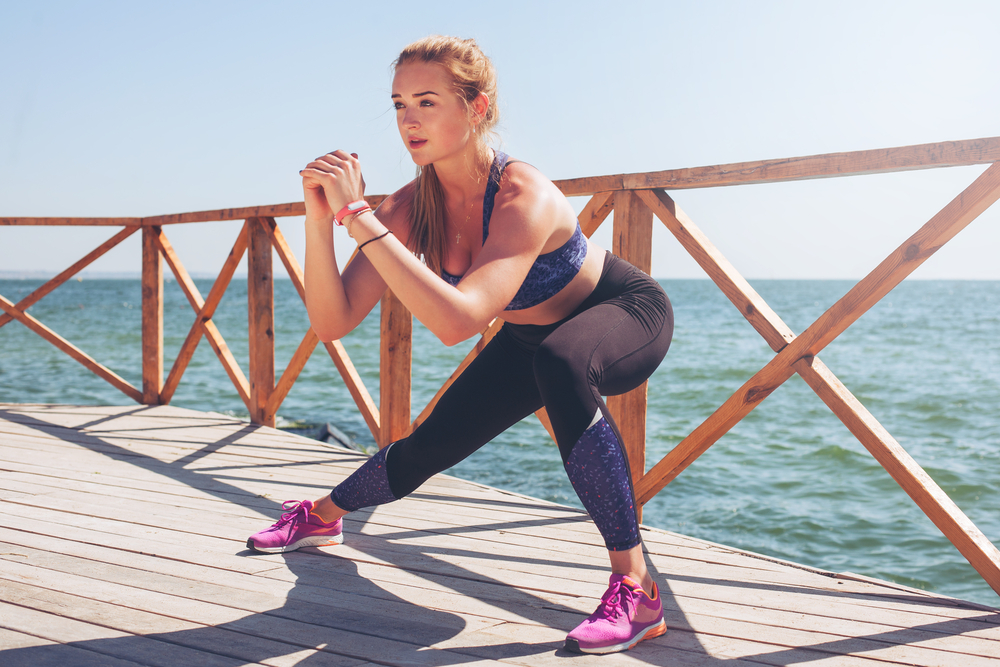
When hotel gyms are under-equipped, overcrowded, or non-existent, your own body weight is the most reliable piece of exercise equipment available. Bodyweight training (calisthenics) recruits multiple muscle groups simultaneously, challenges balance, and keeps joint impact low.
To build an effective room workout, structure your session around the core functional movement patterns:
Knee-Dominant Movement: Squat Variations
Squats target the quadriceps, glutes, and adductors while building core stability.
-
Standard bodyweight squats: Focus on full range of motion, controlling the descent for two to three seconds before standing up explosively.
-
Bulgarian split squats: Place the top of your rear foot onto the edge of a hotel bed or desk chair and lunge downward with the front leg. This unilateral exercise places intense mechanical tension on the front quadriceps and glutes.
-
Tempo goblet squats: If your room has luggage, hold your carry-on suitcase against your chest to add external load.
Hip-Dominant Movement: Hinge Patterns
Hinging exercises strengthen the posterior chain (hamstrings, glutes, and lower back), counteracting the negative effects of prolonged sitting in airplane seats.
-
Single-leg Romanian deadlifts: Balancing on one foot, hinge forward at the hips while reaching your back leg straight behind you. This challenges balance and strengthens the hamstrings and ankle stabilizers.
-
Elevated glute bridges: Lie flat on your back with your heels resting on the edge of the bed. Drive your hips upward toward the ceiling, squeezing the glutes at the top of each repetition.
Upper-Body Push and Pull Patterns
Maintaining upper-body strength requires balancing pushing and pulling movements.
-
Push-up progressions: Standard floor push-ups build the chest, shoulders, and triceps. To increase difficulty, elevate your feet onto a chair or bed. To make the movement more accessible, place your hands on an elevated surface like a desk.
-
Doorframe isometric rows: Stand facing a sturdy open doorway or doorframe, grip the edge with both hands, and lean back. Pull your torso toward the frame, squeezing your shoulder blades together to activate the rhomboids and latissimus dorsi.
-
Chair dips: Place your hands on the edge of a sturdy hotel chair, extend your legs out in front, and lower your hips toward the floor to train the triceps and anterior shoulders.
Core Bracing and Stability
A stable core supports posture and reduces lower-back fatigue during travel transit.
-
Dead bugs and bird-dogs: These movements teach deep core bracing while moving opposite limbs, reinforcing spinal stability without requiring neck flexion.
-
Forearm planks with shoulder taps: Maintain a rigid plank position while lifting one hand to tap the opposite shoulder, preventing your hips from rotating.
Structuring High-Efficiency Hotel Workouts
To get the most out of your time, utilize training formats that keep rest periods short and training density high.
The Twenty-Minute Full-Body Circuit
Perform each exercise in sequence with minimal rest between movements. Rest for sixty to ninety seconds at the end of the circuit, and repeat for three to four total rounds.
-
Bulgarian split squats: 10 to 12 repetitions per leg
-
Push-ups: 12 to 15 repetitions
-
Single-leg glute bridges: 12 repetitions per leg
-
Doorframe rows or banded pull-aparts: 15 repetitions
-
Forearm plank with alternating toe taps: 45 seconds
The Quick-Interval HIIT Session
If your schedule permits only ten to fifteen minutes, an interval structure elevates your heart rate and provides an intense metabolic stimulus.
-
Jump rope or high knees: 40 seconds of high effort, 20 seconds of rest
-
Bodyweight jump squats or fast air squats: 40 seconds of high effort, 20 seconds of rest
-
Mountain climbers: 40 seconds of high effort, 20 seconds of rest
-
Lateral speed bounds (skater jumps): 40 seconds of high effort, 20 seconds of rest
-
Repeat this sequence for three rounds.
Leveraging Non-Exercise Activity (NEAT) on the Go
Formal workouts represent only a small fraction of your total daily energy output. Non-Exercise Activity Thermogenesis (NEAT), which includes all the movement you do outside of structured exercise, is the easiest and most sustainable way to stay fit while traveling.
You can easily accumulate movement throughout your day by building simple habits:
-
Walk everywhere possible: Avoid short taxi or rideshare trips whenever safe and practical. Walking allows you to discover local neighborhoods, architecture, and hidden cafes that you would otherwise miss from a vehicle window.
-
Take the stairs: Bypass hotel elevators and airport moving walkways. Climbing stairs actively recruits the glutes, calves, and quadriceps while elevating your daily energy output.
-
Turn transit layovers into active walking: Use airport connection times to walk laps around the terminal rather than sitting at the gate for hours before boarding another flight.
-
Participate in active sightseeing: Book walking tours, rent a city bike, paddleboard along local waterways, or hike regional trails instead of booking bus-only tours.
Accumulating ten thousand to fifteen thousand steps throughout a day of exploring burns hundreds of calories and keeps your cardiovascular system active without feeling like a traditional workout.
Combatting Travel Stiffness With Mobility Routines
Long hours spent in cramped airplane seats, train cars, or automobiles cause predictable muscular tightness. The hip flexors and hamstrings shorten, the glutes become inactive, and the upper back rounds forward.
Dedicate five to ten minutes each morning or evening to targeted mobility exercises:
-
The World’s Greatest Stretch: Step into a deep forward lunge, place both hands on the floor inside your front foot, and rotate your inner arm toward the ceiling. This simultaneously mobilizes the hips, groin, thoracic spine, and ankles.
-
Couch stretch for hip flexors: Place one knee on the floor with your shin running up against a wall or the front of a hotel couch, and step your other foot forward into a lunge. Squeeze your glute to open the front of the hip and quadriceps.
-
Thoracic spine extensions: Sit upright on a chair, interlace your fingers behind your neck, and gently arch your upper back over the top of the backrest while inhaling deeply.
A brief mobility routine restores normal postural alignment, relieves traveling aches, and prepares your body for the physical demands of the day.
Frequently Asked Questions
How should I adjust my exercise routine if I am suffering from severe jet lag?
When dealing with severe jet lag, avoid high-intensity interval training or heavy maximal lifting, as nervous system fatigue increases injury risk and elevates stress hormones. Instead, focus on low-intensity aerobic activity like outdoor walking in natural sunlight, gentle swimming, or light mobility sequences. Sunlight exposure combined with gentle physical movement helps reset your internal circadian rhythm and boosts daytime alertness.
Can I maintain my muscle mass while traveling if I do not have access to heavy weights?
Yes. Muscle mass is preserved through mechanical tension, high motor unit recruitment, and adequate dietary protein. If you perform bodyweight or resistance-band exercises close to muscular failure (meaning you have only one or two repetitions left in reserve), you recruit high-threshold muscle fibers and stimulate muscle protein synthesis, preventing muscle atrophy during trips lasting several weeks.
What is the best way to clean and store sweaty workout clothes in a suitcase?
Pack lightweight, moisture-wicking synthetic workout apparel rather than heavy cotton fabrics, as synthetics dry much faster. After your workout, rinse your clothes in the hotel sink with mild soap or body wash, wring them out in a dry towel, and hang them in the bathroom to dry. Alternatively, pack a dedicated odor-resistant laundry bag or sealable dry bag to keep used workout gear separate from clean clothing.
How can I stay physically active during an extended eight to twelve-hour flight?
During long-haul flights, stand up and walk down the airplane aisles every sixty to ninety minutes when the seatbelt sign is off. While seated, perform seated calf raises, ankle circles, glute contractions, and seated pelvic tilts to promote venous blood return from your lower legs and reduce the risk of deep vein thrombosis and joint stiffness.
How do I find safe running or walking routes in an unfamiliar foreign city?
Use fitness mapping applications like Strava Global Heatmaps or local running community platforms, which show popular, frequently traveled routes used by local runners. You can also consult the hotel concierge or front desk staff, who can recommend well-lit public parks, waterfront pedestrian paths, and safe running corridors while highlighting neighborhoods to avoid.
What should I do if my hotel room is too cramped to perform full bodyweight exercises?
If floor space is limited, look for underutilized spaces within the hotel, such as quiet stairwells, rooftop terraces, empty conference corridors, or outdoor courtyards. Alternatively, take your workout outside to a nearby public park, where you can utilize park benches for step-ups and dips, and open lawns for bodyweight circuits.
Should I take rest days while traveling if I am walking over fifteen thousand steps a day?
Yes. Walking extensive distances through cities or natural landscapes is a form of low-intensity endurance exercise that taxes your feet, calves, and lower back. If you are logging unusually high step counts, listen to your body and scale back formal strength or interval workouts, treating your active sightseeing as your primary exercise for that day.